
A Precedent
In 1998 Iceland announced its intention to eliminate its dependence on fossil fuels by creating a hydrogen energy economy. Endowed with abundant geothermal resources, the local price of electricity was lower than the price of the hydrocarbons that could be used to produce it. Accordingly, Iceland decided to export its surplus electricity by converting it into an exportable commodity, and in 2002 it produced 2,000 tons of hydrogen gas by electrolysis, primarily for the production of ammonia, at a local fertilizer plant. Due to reasons unrelated to the price of hydrogen, in 2004 the plant went out of business, and by 2006, deprived of its main customer, hydrogen production fell to negligible levels. However, these events proved that under certain conditions it is possible to produce hydrogen at prices below fossil fuels.
Purpose
The purpose of this plan is to use solar energy to produce hydrogen and oxygen from the electrolysis of seawater (brine) in the U.S. for domestic use and export it to China and elsewhere to: (a) replace coal as its primary fuel to generate electricity; (b) produce pure water, and (c) eliminate the main culprit of air pollution. The system would be efficient and profitable.
Hydrogen
With present knowhow more energy is required to produce hydrogen from water than can be obtained by oxidizing it. As a result, a self-sustaining chain reaction is not possible and an external source of energy, usually natural gas, is required. Since it is more efficient and less costly to use gas directly to make electricity, global hydrogen production from water electrolysis, which requires electricity itself, is currently negligible, about 4%.
The Solar Exception
Fossil fuels and nuclear fission require extraordinarily costly and risky exploratory, mining, processing, and delivery operations. The incessant, ever-increasing burning of oil and coal has caused global warming and polluted the environment, and the need for a guaranteed supply of oil threatens to catalyze a cataclysmic war that will benefit no one and solve nothing. As for nuclear waste, its radioactive emissions last for hundreds of thousands of years, and current technology does not have a cost-effective way to stop them. In contrast, solar energy –the mainstay of most life on our planet- is delivered to us free, constantly, universally, and in great abundance.
Free elemental hydrogen gas occurs naturally on Earth, but it is not widely accessible. Instead, most of it has combined with oxygen to form the oceans, lakes and rivers that cover three fourths of the surface of our planet. The process of producing elemental hydrogen from water using electricity is known as electrolysis. Due to its salt content, which is a natural electrocatalyst, seawater (brine) is about one million times more conductive than pure water, therefore it is far more energy-efficient to use brine to produce elemental hydrogen. One of the main obstacles to do so is that seawater and uninterrupted sunlight do not naturally coexist in high-yield locations -defined as exceedingly long coastlines naturally sheltered from precipitation such as hurricanes, cyclones, typhoons, snow, rain, quasi-permanent cloud cover or fog or sandstorms- safe from the incessant threat of all-out war. Consequently, it behooves us to find a way to combine the sun’s energy, gravity and brine, which are free, abundant and virtually inexhaustible, to export hydrogen and freshwater at a lower cost overall to countries who would need to build enormously expensive irrigation projects and either fossil or nuclear plants to develop their arid regions. This article describes a way to do precisely that.
Why produce hydrogen when the same solar energy could be used to produce electricity directly? Electricity cannot currently be easily exported from one non-contiguous landmass to another, and no country is currently exporting its surplus solar energy. A perfect example is the State of Hawaii; the islands cannot connect their grids, and its surplus solar energy is not being exported. Since an efficient, low-cost medium has not yet been discovered to do so, hydrogen -nature’s battery- is the way to go. The first country that does it may well become the world’s largest and preferred energy supplier and the recipient of unimaginable wealth.
Why should other countries want to buy American-produced hydrogen? Because only the U.S. could potentially export hydrogen a price below what others would have to pay for the sum of coal, gas or nuclear fuel; the hydrogen would allow buyers to generate electricity from a clean source and simultaneously manufacture water. Should hydrogen replace coal as the principal fuel to generate electricity, one of the largest sources of carbon dioxide and other pollutants would be eliminated; eventually the hydrogen might also be used for mobile applications. In addition, for countries that rely on nuclear power or have announced plans to increase their reliance on it such as France, Japan, and China, the ever-present danger of contamination due to natural catastrophes, terrorism or war would disappear.
Storage And Transportation Of Hydrogen
Hydrogen is corrosive; therefore, pipelines and storage tanks require expensive internal coatings. However, underground caverns, salt domes and depleted oil and gas fields, which do not corrode, are currently used to store hydrogen. Similar facilities could be dug near electric power plants at a relatively low cost. While initially expensive, the additional cost of coating the pipelines used to distribute it –which would be borne by the users- would be offset by low-cost raw materials, reliable supplies, and a cleaner environment.
Death Valley
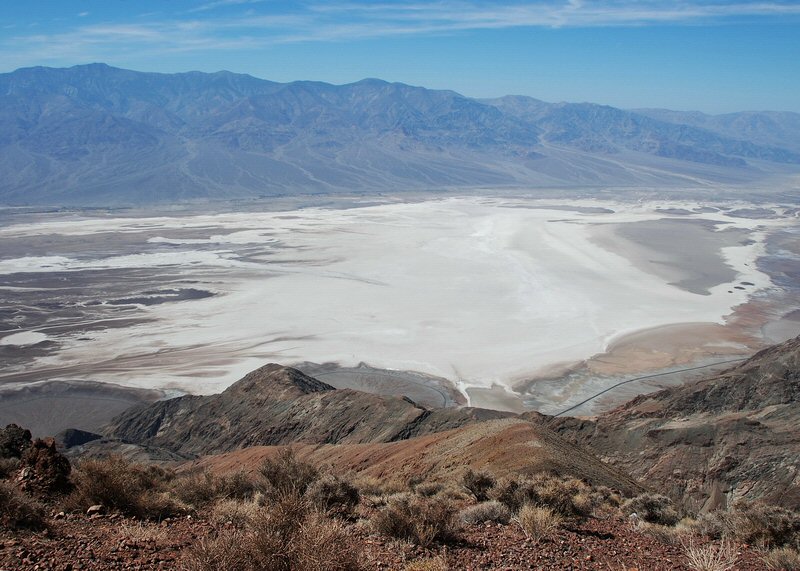
Formerly part of a Pleistocene-era inland sea, Death Valley’s physical characteristics are unique. Four consecutive mountain ranges shield it from precipitation and sandstorms, and at 282 ft below sea level, it is the lowest point in North America. As a result, solar exposure is virtually constant, the average daily wind speed is 10.4 to 12.5 miles per hour, the average annual precipitation varies between 1.58 and 2.2 inches per year, and the evaporation rate is an astonishingly high 143 inches per year. These statistics are important because they indicate that were it to be permanently filled with water, the high evaporation rate alone would promote and support an entirely new ecosystem.
Death Valley occupies approximately 3,000 square miles of sparsely-populated territory about 200 miles northeast of Los Angeles and 100 miles west of Las Vegas. A proposed high-speed train between Los Angeles and Sacramento, about 125 miles southwest, could be extended to Death Valley, Las Vegas and beyond. Because of its characteristics and location, it is the ideal hub of a potential interconnected network of shallow seawater lakes in portions of California, Nevada, Arizona and possibly even New Mexico and Texas that could be used to mass-produce hydrogen by electrolysis of seawater using solar energy exclusively.
Unlike fossil fuels, which require extensive labor costs, the price of this hydrogen would reflect the cost of three free, inexhaustible resources: gravity, seawater and solar energy. Furthermore, once fully operational, the resulting economy of scale could be expected to reduce its cost even more. The main challenge would be to meet the demand rather than amassing the required capital, engineering, or construction technology and equipment.
Requirements
Specific Benefits
• Requires only seawater, sun and gravity; no greenhouse gasses are released.
• Creates a new ecosystem to help reduce global warming.
• Relies on natural topographic characteristics unavailable elsewhere to create a virtual monopoly on exportable renewable energy.
Employment
• Creates a new low-cost energy source thus facilitating production and job creation in heavy users of electricity such as aluminum and rare earth minerals.
• Creates secondary businesses such fish farming, tourism, salt harvesting, construction, agriculture, with all its supporting services.
• Creates jobs that cannot be relocated or outsourced; low energy, and transportation costs would help to offset competing lower labor and medical costs in developing nations.
Energy
• Energy independence. Natural gas from domestic and friendly sources currently used to generate electricity could be used to power automobiles.
• Produces low-cost hydrogen commercially, the first step toward an eventual full hydrogen economy.
• Creates a massive hydrogen-producing industry to replace coal, gas and nuclear as the preferred fuel source.
• Creates a reliable supply to support future widespread applications such as fuel cells.
• Envisions that all new buildings in the new frontier, including homes, would generate a surplus of electricity. High-tension transmission lines would thus be reduced or eliminated, increasing efficiency and security in case of natural or man-made catastrophes.
Fiscal/Economic
• Privately financed –no cost to any government.
• Improves the credit rating of federal and state governments and reduces borrowing costs.
• Reduces unemployment if the unemployed are hired.
• Attracts domestic and foreign capital wishing to lock in future profits.
• Stimulates the stock market because the size and scope of the new economic frontier would stimulate and expand the economy.
• Expands the tax base, increases revenue, and decreases unemployment expenditures.
• Extends the dollar’s role as the world’s reserve currency.
Legal
• Currently, riparian laws may not specifically regulate the creation of large bodies of inland seawater because there are none. The Great Salt Lake is saltwater but not seawater, and it is not man-made.
• The initial phase would begin in California, therefore immediate interstate agreements and/or congressional intervention might not be necessary.
Political
• Promotes national unity, incorporates Republican & Democratic principles and ideology.
• Showcases American resolve to unite for the common good using domestic resources.
• Promotes peace by promoting global reliance on low-cost American-produced hydrogen while reducing the over-dependence on fossil fuels.
Real Estate
• Income from the energy produced by each building –residential, commercial or industrial- might be appurtenant to the land to reduce risk to lenders.
• Creates desirable waterfront properties with views, increases value.
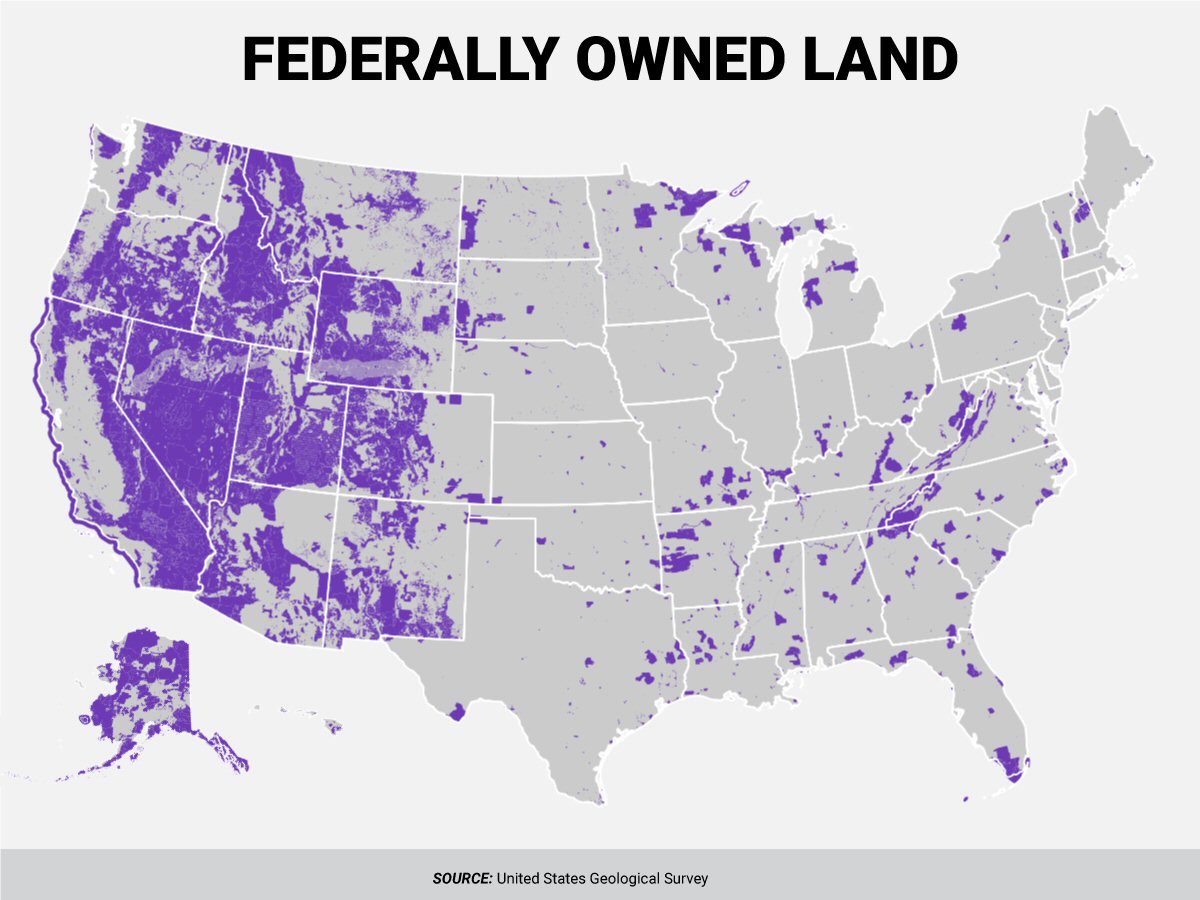
• Creates a construction and lending boom -in many cases on fallow federally-owned land- supported by permanent incomes, to accommodate the workers in the new economic zone